


ArtPix 3D Editorial Team · Updated October 2026 · 8 min read
Every December someone volunteers to run the gift swap, and then realises nobody agrees on the white elephant rules. Half the room learned it with three steals per gift, the other half with unlimited stealing, and one cousin insists the first player gets a swap at the end. The game only works if everyone plays the same version, so settle it before the first number is drawn. This guide covers the standard rules step by step, where the name comes from, the house rules worth agreeing, and how to run it at work, with family and with friends.
Quick answer: in a white elephant gift exchange, every player brings one wrapped gift with no name on it, under a price limit the host sets, often around $20 to $30. Players draw numbers. Player 1 opens a gift from the pile. Each player after that either opens a new gift or steals one already opened, and anyone who loses a gift chooses again. Most groups cap steals at 3 per gift and give player 1 one last swap at the end.
What is a white elephant gift exchange?
A party game played with gifts. Every gift goes into one pile, and the order of play and the stealing decide who goes home with what. The games people confuse with it differ on two points: who the gift is for, and whether it can be taken.
White elephant
- Who the gift is for: nobody in particular, it goes into a shared pile
- Stealing: allowed, usually capped at 3 steals per gift
- Price limit: set by the host, often around $20 to $30
- Kind of gift: funny, useful, or ideally both
- Best for: groups of 6 or more who enjoy a little rivalry

Secret Santa, the tradition next door
- Who the gift is for: one person, whose name you drew in advance
- Stealing: none
- Price limit: set by the group, often the same $20 to $30
- Kind of gift: chosen for someone you know
- Best for: offices and families who want every gift to fit its owner
Yankee swap and Dirty Santa
- Who the gift is for: nobody in particular, same shared pile
- Stealing: allowed, with the cap set by house rules
- Price limit: set by the host, like white elephant
- Kind of gift: the same mix of funny and useful
- Best for: the same groups; these are regional names for the same game
There is no official rulebook, so the steal cap and the final swap change from one party to the next. Read the rules out loud before anyone opens anything.
White elephant meaning: where the name comes from
A white elephant is something costly to keep and impossible to get rid of. The phrase comes from a story, more legend than documented history, about the kings of Siam: a white elephant was sacred, so it could not be worked or given away, and a king could ruin a courtier by presenting him with one.
The gift exchange took the name because early versions were about unloading things: the odd vase from the back of a cupboard, wrapped and fought over. The best gift in the pile is rarely the most expensive one. It is the one the room laughs at and then quietly wants.
How to play white elephant, step by step
- Set the price limit and put it in the invitation.
- Wrap one gift each with no name or tag, and add it to the pile.
- Draw numbers from a bowl. The number is your place in the order.
- Player 1 opens any gift and shows it to the room.
- Player 2 chooses: open a new gift, or steal player 1's. A player who has just been robbed opens a new gift or steals from someone else, but cannot take back the gift that was just taken.
- Keep going in number order. A turn ends only when someone opens a new wrapped gift.
- Freeze a gift on its third steal. It stays with its third owner.
- Give player 1 a final turn. Player 1 had nothing to steal at the start, so at the end they may swap once with anyone holding an unfrozen gift.

That is the whole white elephant game, and most of its time goes on the stealing.
White elephant gift rules: price, wrapping and what counts
A bad gift kills a round faster than a confused turn order.
- Spend close to the limit. A $5 gift in a $25 game is the one nobody steals.
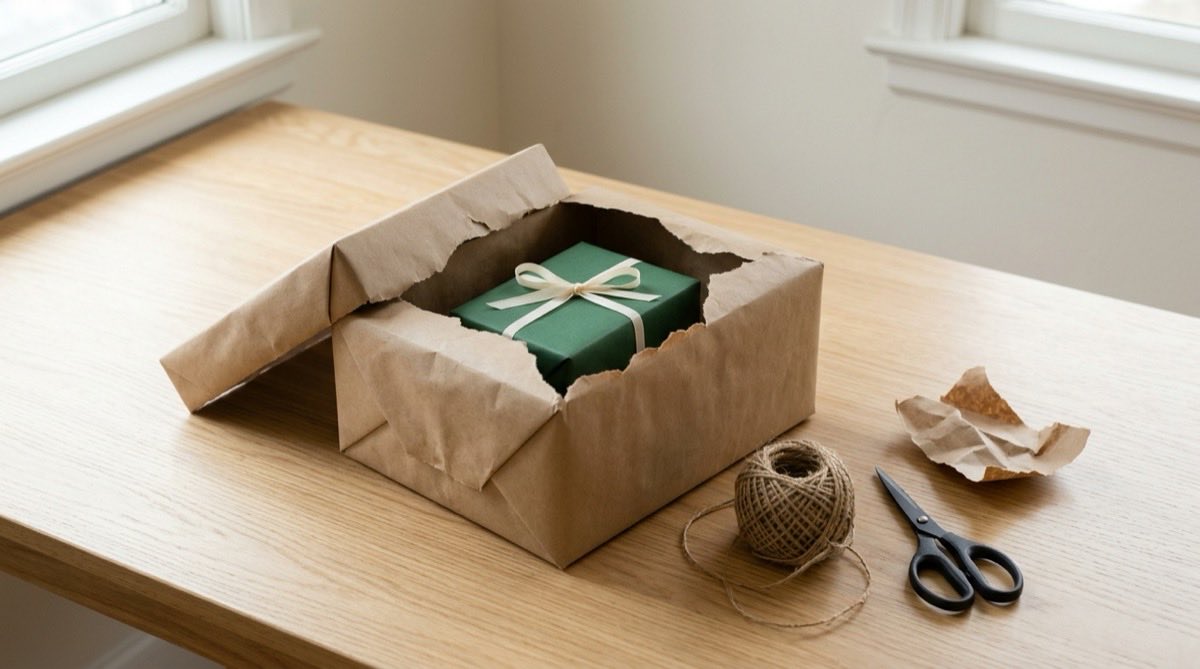
- Wrap it to hide the shape. A box inside a box stops the guessing; our fun and easy gift wrapping ideas include more ways to disguise a shape.
- Make it usable by anyone. It goes to a stranger as easily as to a friend.
- Funny is allowed, useless is not. The gift people fight over is a joke with something useful underneath.
- Regift only if the host says so. Some groups play a "from your own house" round on purpose.
House rules to agree first
- Steal cap: 3 steals per gift is common; some groups use 2 to keep the round short
- Steal-back: not allowed straight away, allowed later in most groups
- Final swap: player 1 gets one in most versions, none in others
- Peeking: no shaking or unwrapping before a gift's turn
Running it at the office, with family and with friends
At the office
Keep the limit at $25 or below and the gifts neutral: food, desk items, something for the commute. If your team would rather buy for one named person, Secret Santa suits an office better, and our list of Secret Santa gifts for coworkers covers that route.
With family
Run two rounds when children play, one for adults and one for kids, with a ribbon colour marking each pile. A child who loses a toy to an uncle on the third steal does not find it funny. Our Christmas gift exchange ideas for big families has other formats.

With friends
This is where gag gifts belong. Raise the limit, loosen the cap, but agree one: unlimited steals with 20 players can last most of the night.
The version that costs nothing
Play it the old way. Everyone wraps something they already own and do not want: the fondue set, the novelty mug, the lamp that never matched. It costs nothing, and every gift comes with a story its owner has to tell.
Said plainly, this round usually beats a bought one. The laughter comes from the stories and the steals, and a cupboard round has more of both.

The one thing not to bring
Something only one person in the room can use: a sweater in one size, a book from the middle of a series, a dog toy when half the room has no dog. Nobody steals it, and the round loses a gift. The test: would half the room be glad to end up with it?
Where a photo gift fits, and where it does not
At an office party of thirty people, a personalised gift is the wrong choice. A photo of your family is worth nothing to the colleague who ends up holding it, and the game depends on gifts that work for anyone.
The case flips in a family or a close group of friends, where everyone knows the picture. Our 40-piece Rectangle Photo Puzzle prints one photograph on a puzzle of 7.8 by 11.34 inches, and its list price of $19.99 sits under a $20 limit. Put last summer's most unflattering group photo on it and it becomes the gift the room steals. The product page says an adult finishes it in a few minutes, which suits a party: the winner can assemble it on the table while the game goes on. For a $30 limit, our personalized photo puzzles include a 126-piece version at $28.99 list, smaller and harder. Order early: the product page quotes 1 to 2 business days to make it and 3 to 5 days for US delivery.

What to write on the gift tag
White elephant gifts carry no name, but a line on the tag adds to the game:
- "Steal me. You know you want to."
- "Open me last and you might keep me."
- "Warning: contents have started family arguments before."
Why trust ArtPix 3D
We have made personalised photo gifts since 2017, at our own facility in Elk Grove Village, Illinois, and our Trustpilot rating is 4.7 out of 5 from more than 63,800 reviews. We ask every customer for a review, positive or negative, and reply to every negative one within 24 hours. Every crystal order gets a free 3D preview before anything is engraved. Questions go to a real team on +1 (855) 227-5861.
Frequently asked questions
What is a white elephant gift?
A white elephant gift is a wrapped present brought to a group gift swap without a recipient in mind. It goes into a shared pile, and players open or steal gifts in turn until each person holds one. It should cost close to the agreed limit, often around $20 to $30, and be usable by anyone in the room.
How does white elephant work?
Players draw numbers. Player 1 opens a gift from the pile, and each later player either opens a new gift or steals an opened one. Anyone who loses a gift chooses again, so a turn only ends when a new gift is opened. Most groups freeze a gift after its third steal and give player 1 a final swap.
What is white elephant gift giving, and where did the name come from?
It is a gift swap where gifts are pooled, opened in turn and stolen. The name comes from a story about the kings of Siam, who were said to give a sacred white elephant to a courtier they disliked: an honour too costly to keep and impossible to give away. Early swaps were for unloading unwanted things.
How many times can a gift be stolen in white elephant?
In the most common version, three times. On the third steal the gift is frozen and stays with its new owner for the rest of the game. Some groups cap it at two to keep the round short, and some allow unlimited steals, so the host should announce the cap before the first gift is opened.
How much should you spend on a white elephant gift?
Spend what the host sets, and spend close to it. Most groups pick a limit somewhere around $20 to $30; offices often stay at $25 or below. A gift far under the limit is rarely stolen, and one far over it makes everyone else's gift look small. If no limit is given, ask before buying.
What is the difference between white elephant and Secret Santa?
In Secret Santa you draw one person's name and buy a gift chosen for them, with no stealing. In white elephant nobody knows who will get their gift: all gifts go into a pile, and the order of play and the steals decide who keeps what. Secret Santa rewards knowing someone, white elephant rewards nerve.
Related from ArtPix 3D

10 Sweet Things to Do for Your Spouse After a Big Fight
Wrapping Presents on Christmas Eve? Try These Fun and Easy Gift Wrapping Ideas
19 Thoughtful Housewarming Gifts New Homeowners Will Use All the Time
Congratulate a Sibling on 30 Years of Marriage with a Unique Gift